
Black Pond. Chalker & Fenn. Witchcraft History Trail. Meriden Green.
Travel is like a big wooden spoon, stirring up memories and connections that add to the stew of life. All heard and walked. Read, discussed.
— Moo Dog Press (@moodogpress.com) October 13, 2026 at 5:14 PM
Right in front of you, Black Pond. The boathouse that isn’t there. The structure used previously for ice harvesting. In the kitchen right now, a blue-painted nicked and scarred enamel metal table, bought at the sale when the boathouse was closing forever. Mr. and Mrs. Holmes; Buzzy. Coffee cans for bailing the boats; images taken for The Gazette. So long ago that the photographs have negatives.
New–but actually quite old–Witch Trial-Related Sites In Connecticut (timed and with a Halloween-theme, yes, but the real people of history are there and remembered). In 2026, these true tales have gained traction for tourism.
Key Witch Trial-Related Sites In Connecticut
ctvisit.com/articles/con…
— Sarah Jack (@restingwitches.bsky.social) September 5, 2026 at 4:49 PM
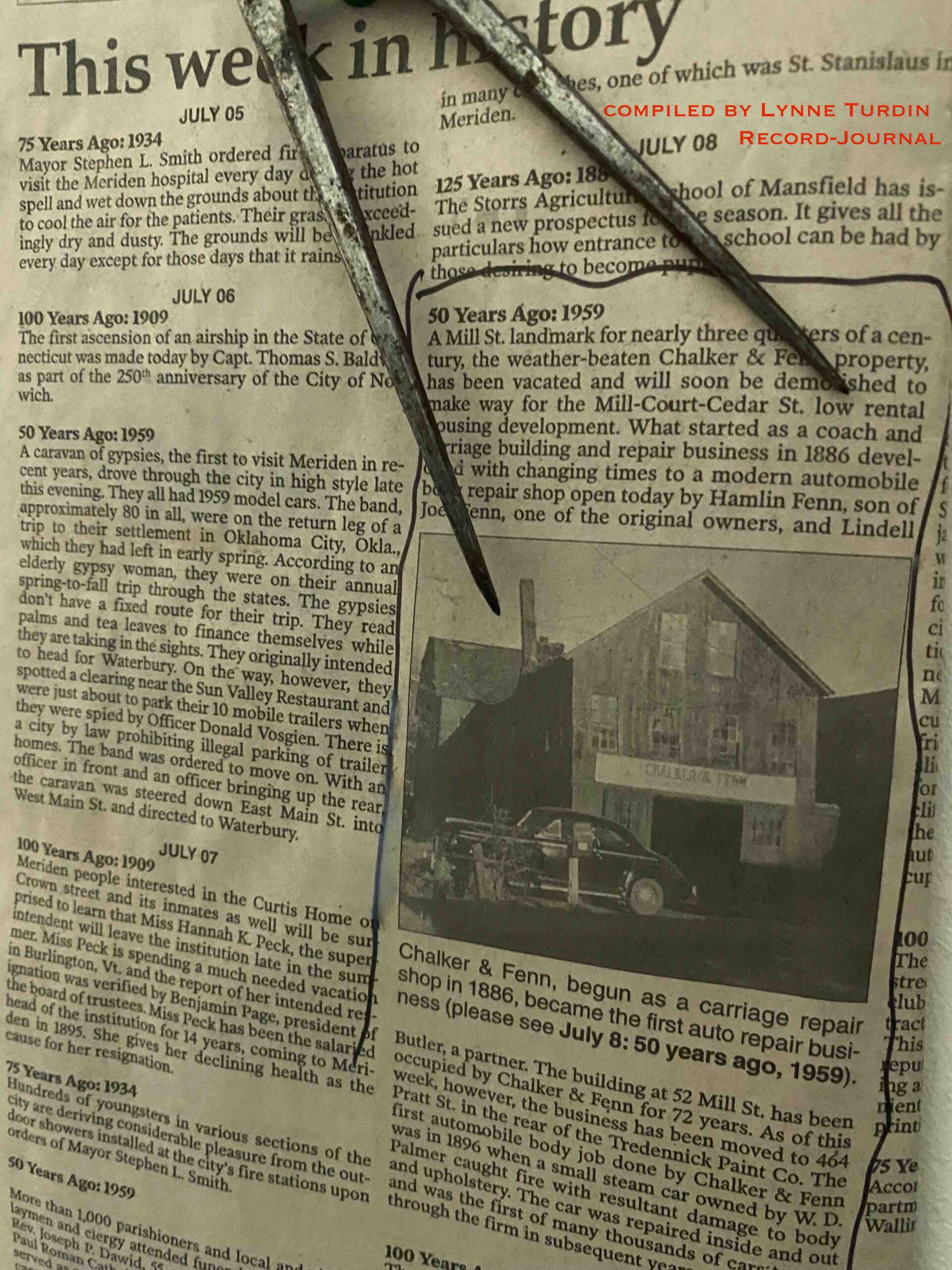
Chalker & Fenn encircled by my mother who has passed from this life. This Record-Journal print version from 2005 was compiled by the late Lynne Turdin and appeared irregularly. Excerpts of her columns regularly appear on FB You Know You’re From Meriden though uncredited to Turdin, who did the diligent research, writing/editing. (My maternal grandfather worked as a blacksmith at Chalker & Fenn; that’s the reason my mother highlighted this segment.)
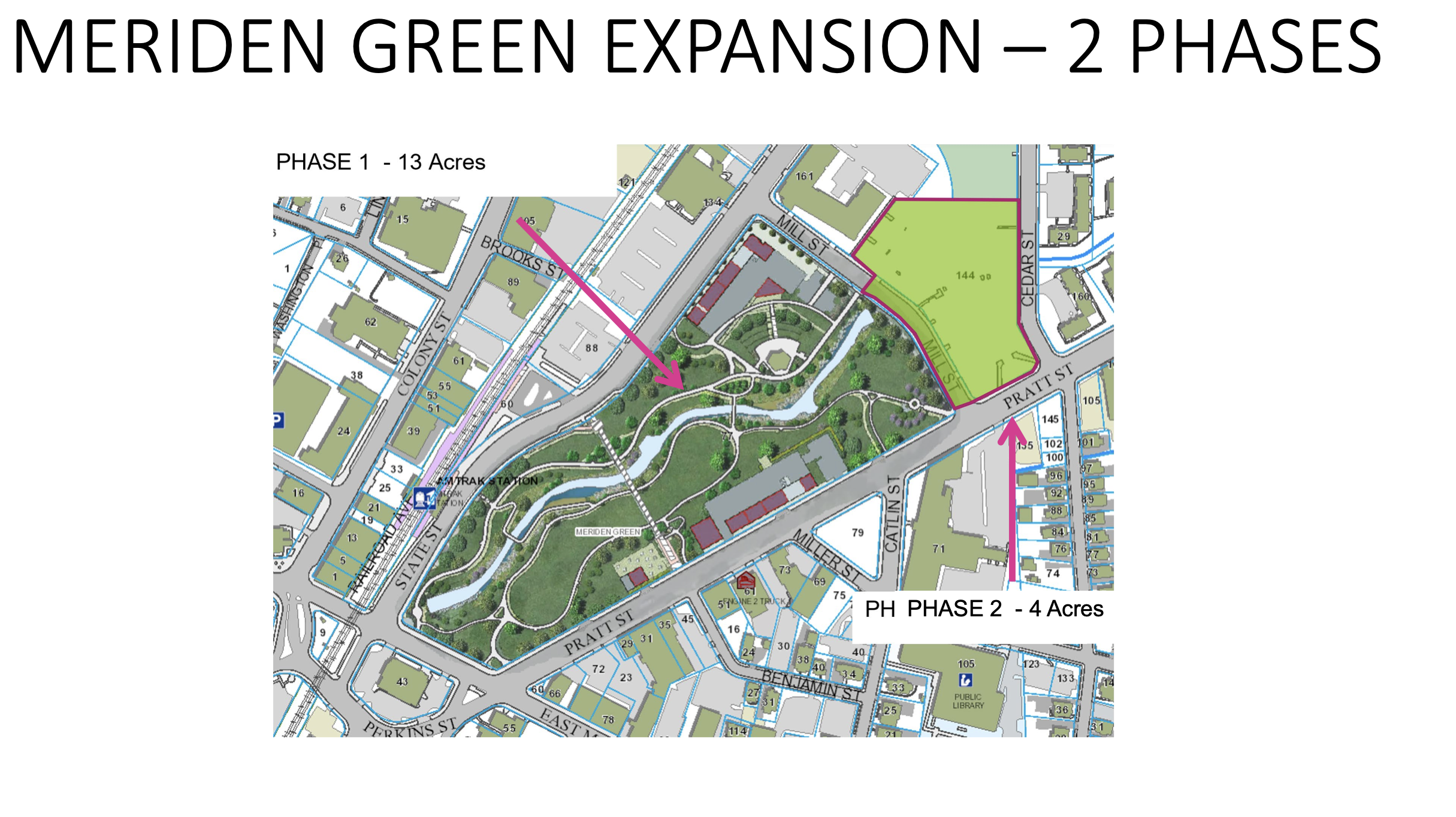
Recent trips to the library, stop sign and then passing the now-cleared land at the corner of Pratt and Mill Streets, seeing blocks of brownstone. Wondering if these were the foundation stones for Chalker & Fenn barn, buildings–and if any other artifacts were found in the digging, excavating.
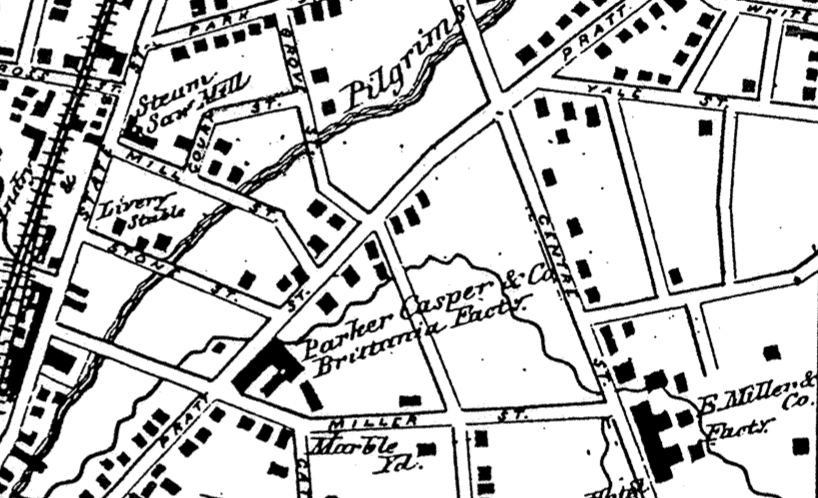
Detail Plan of City of Meriden 1868 published by Beers Ells & Soule via City of Meriden maps site, link will take you there.
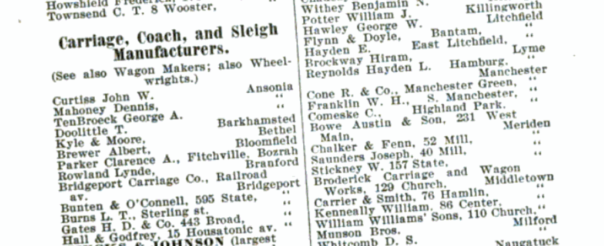
Chalker & Fenn in The New England Business Directory and Gazetteer (page 1391). Via Google Books, linked.
Mill Street will soon disappear under the planned extension of the Meriden Green.
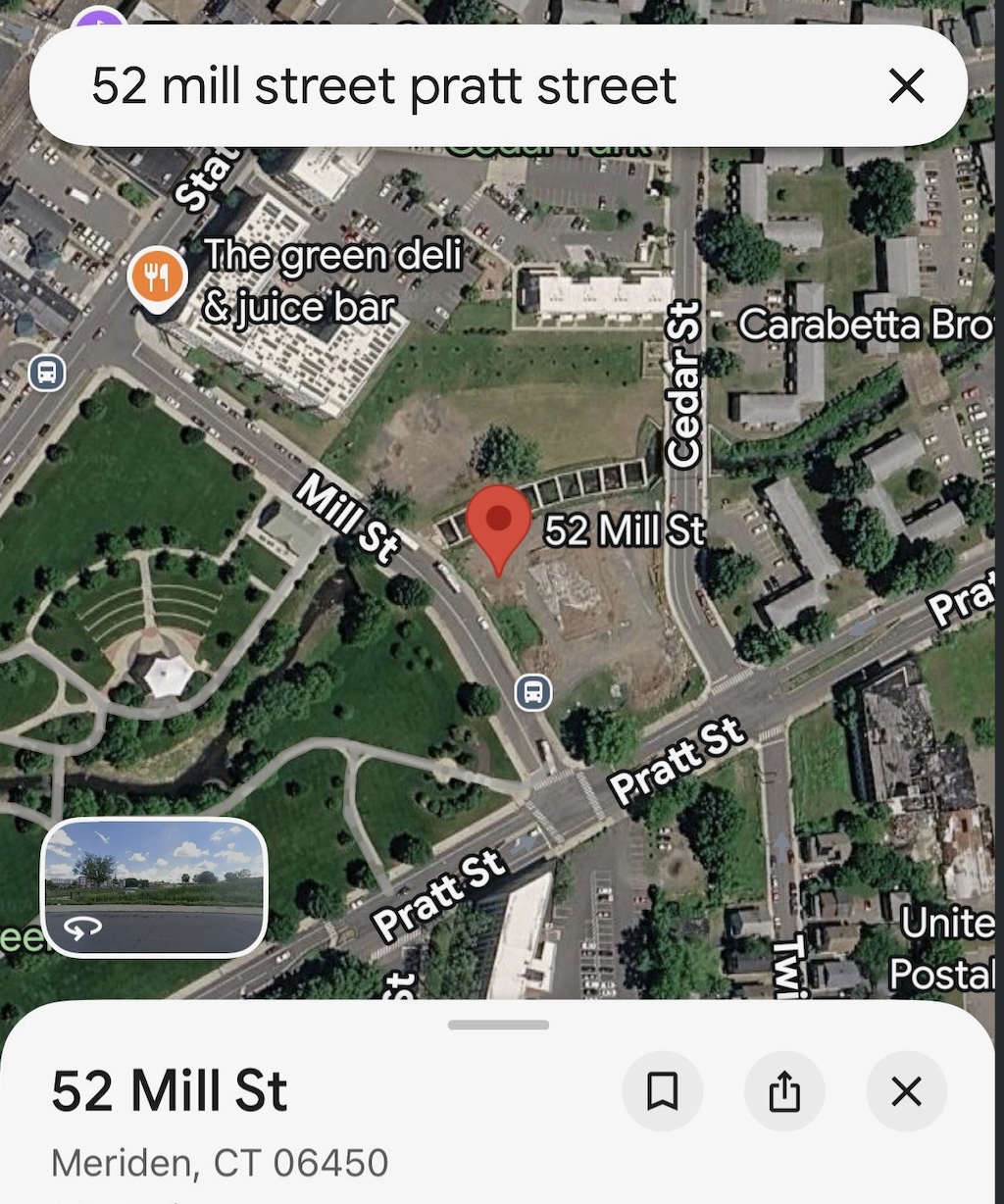
Mill Street location of where Chalker & Fenn once stood. Connected to Google Maps.
Entering the trailhead to the top of Meriden’s basalt mountains, the sounds of vehicles transporting visitors north from Connecticut is loud but all eventually fades in the distance. Keep walking, riding. (Shhh.) Along the trail, thinking about the manuring of field with money exchanged for goods in the process–cash and electronic–that happens in the process of travel, tourism.
Humans get an itch this time of year, want to move around, see beauty, foliage, prepare for the non-color season. Pick up ideas sparked by seeing something different. Cross-fertilization of places, technologies.
Like the one below (linked, so you can see how it works) where images from then fade into the now–helping visitors visualize time and changes.
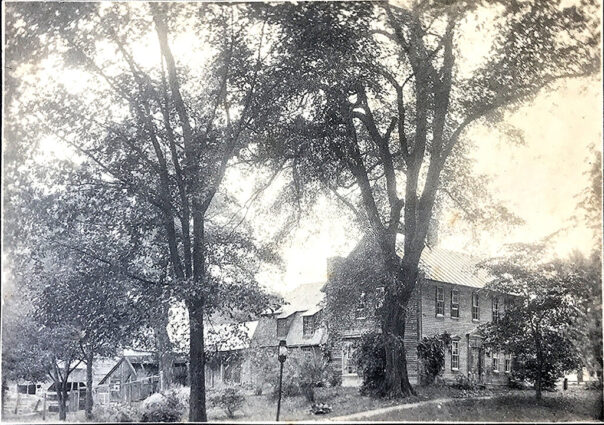
Then. The Sheldon House (1754) “…was home to town historian George Sheldon (1818-1916), who was instrumental in forming the Pocumtuck Valley Memorial Association and authored the two volume work, A History of Deerfield. Image Historic Deerfield, linked to amazing then and now images (One image fades into another with viewer’s choice of when.)
Travel is tidal. When the tide recedes (usually after the weekend), fertilizer in the form of money is left behind, goods exchanged. Time spent, weary from hike, walk, explorations, food and picnic; satiated seeing and learning. Humanity has been moving around by season for quite some time. On foot, by water. With livestock, horseback. Then wheels powered by engines and fuel. Now there are vehicles plugged in, powering up.
Writer, write. (And remember what it is like not to know.) Ask questions. Such as: Where does the wastewater go from the very busy Vermont Welcome Center?
Answer. To nearby Brattleboro via sewers. More than 800,000 humans a year flow through the Guilford Vermont Welcome Center. Water. Flushing, hand washing. (Read The Big Necessity by Rose George. Eye-opening.)
“How many things are looked upon as quite impossible until they have been actually effected.”–Pliny